
Lynnwood, WA · Garage Door Service
Is Your Lynnwood Garage Door Worth Fixing, or Done
Lynnwood homes mostly date 1965-2001, median 1988. Here's how that build era and our mild, damp climate decide whether your door is worth repairing or replacing.
- Repairs & new doors
- Springs & openers
- Serving 6 nearby communities
How Local Conditions Play In
Most of the housing around here went up between 1965 and 2001, with the median landing around 1988. That means a lot of the doors we get called out to are original or close to it - steel panels, extension or early torsion springs, and hardware that was standard for its decade but isn't what's sold new today. Across the 35 named areas in this stock, the bulk of what's out there is 1980s and 90s construction, which tells you more about the door than the address does.
The climate here is mild with occasional freeze. That doesn't sound dramatic, but it matters for a 30-plus-year-old door. Mild and damp means moisture sits on steel tracks and spring coils longer than it would somewhere dry, and surface rust creeps in quietly over years. Then a cold snap tightens metal that's already pitted, and that's usually when a spring finally lets go or a roller seizes in its track. It's not one bad storm doing the damage - it's decades of low-grade moisture exposure on hardware that was never built to be maintenance-free forever.
So when we look at a door here, age of the house tells us roughly what we're going to find before we even open the panel.
The Cost of This Job
We're not going to hand you a number here that isn't backed by a quote - pricing depends on the door, the spring size, whether the opener's original, and what's actually failed. What we can tell you is what drives the cost up or down in homes built in this 1965-2001 window.
A single door with a worn extension spring is usually a straightforward swap. A double door with torsion hardware that's original to a late-80s build is a bigger job, partly because finding an exact match for older drums and shafts takes more labor than installing current stock parts. Panel damage is where it gets expensive fast - steel sections from this era often aren't made anymore, so one dented panel on an otherwise sound door can mean replacing the whole door rather than patching it.
Our household income data for the area runs well above the regional norm, and in practice that means more owners here choose full replacement over a patchwork repair once a door's original hardware starts failing - not because the repair isn't possible, but because it stops making sense to keep chasing discontinued parts. We'll tell you straight which category your door falls into before we start work, not after.
The Problem
The failure we see most in this housing stock is a spring that's outlived its hardware. Doors built when the median house here went up - call it 1988 - were sized for the springs and openers available then. Thirty-plus years on, a spring under daily tension in a mild, damp climate loses temper gradually. It doesn't always snap dramatically; sometimes the door just gets heavier to lift, the opener strains, and the gears inside wear out faster trying to compensate.
Rollers and cables show the same pattern. Steel rollers from this era corrode at the axle after years of moisture, and a cable that's frayed slowly is more dangerous than one that's visibly snapped, because it can let go without warning under full door weight.
The honest limitation: if your door is an older size or panel pattern that the manufacturer discontinued, we may not be able to source an exact match. In that case we'll say so and walk you through what a comparable replacement door looks like, rather than stall the job hunting for a part that isn't coming.
Leaving It Alone
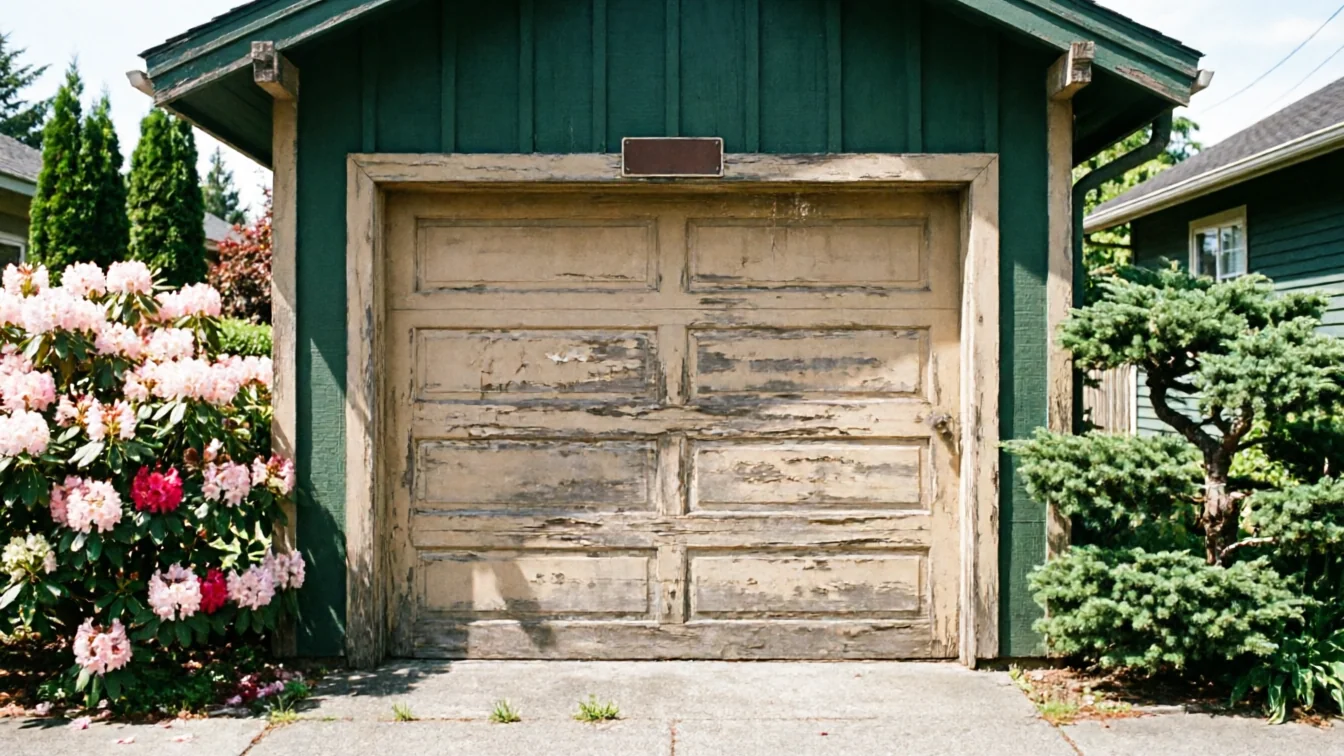
A door built in the 1965-2001 range that's starting to show its age doesn't fail all at once. It fails by stages - a slightly slower close, a cable strand or two gone, a roller grinding instead of rolling. Each stage is cheaper to fix than the next one.
Left alone, a weakening spring puts more load on the opener's gears, and we end up replacing both instead of one. A fraying cable left in place can let a double door drop suddenly, which is a safety problem in a garage people walk through daily. And in a mild climate with occasional freeze, metal fatigue that's ignored through one cold spell tends to show up again the next one, usually worse.
With over 80,000 owner-occupied houses in this service area built mostly in this same window, this isn't a rare situation - it's the normal state of an aging door here. Catching it early is almost always the cheaper path, and it's worth a call before the slow failure becomes a no-notice one.
Frequently asked questions
My garage door is from the 1980s - is it worth repairing or should I replace it?
Depends what's failed. A spring or roller swap on an 80s door is usually worth doing if the panels are sound. If a panel's damaged or the torsion hardware is discontinued, replacement often makes more sense than chasing obsolete parts. We'll look at the specific door before giving you a direction.
Does Lynnwood's climate affect how long garage door springs last?
The mild, damp conditions here mean moisture sits on steel longer than in a dry climate, so surface rust builds up gradually on tracks and spring coils. An occasional freeze then stresses metal that's already pitted. It's a slow wear pattern rather than sudden storm damage.
Can you still get parts for a garage door built in the 1980s or 90s?
Sometimes, sometimes not. Common spring and roller sizes are usually available. Specific panel sections from discontinued door lines often aren't, which is the main reason a single damaged panel can turn into a full door replacement on an older unit.
Related garage door services in Lynnwood
More garage door guides
Book garage door service in Lynnwood
Call now or request a quote - tell us what the door is doing and where you are.