Lynnwood, WA · Garage Door Service
Why So Many Lynnwood Garage Doors Have No Insulation at All
Most Lynnwood garage doors date to the 1965-2001 building boom, before energy codes required insulated doors. Here's what that means for repair and replacement.
- Repairs & new doors
- Springs & openers
- Serving 6 nearby communities
How Local Conditions Play In
Lynnwood's housing stock is concentrated in a narrow window - most of it went up between 1965 and 2001, with the median house dating to 1988. That one fact explains a lot about the garage doors we see on service calls. Insulation requirements for garage doors weren't standard practice when most of this city was built, so a huge share of the original doors out here are single-layer steel or wood panel with nothing behind them. You feel it most in houses near Alderwood Manor and Martha Lake, where a lot of the 1980s tract construction never got touched after the original door went in.
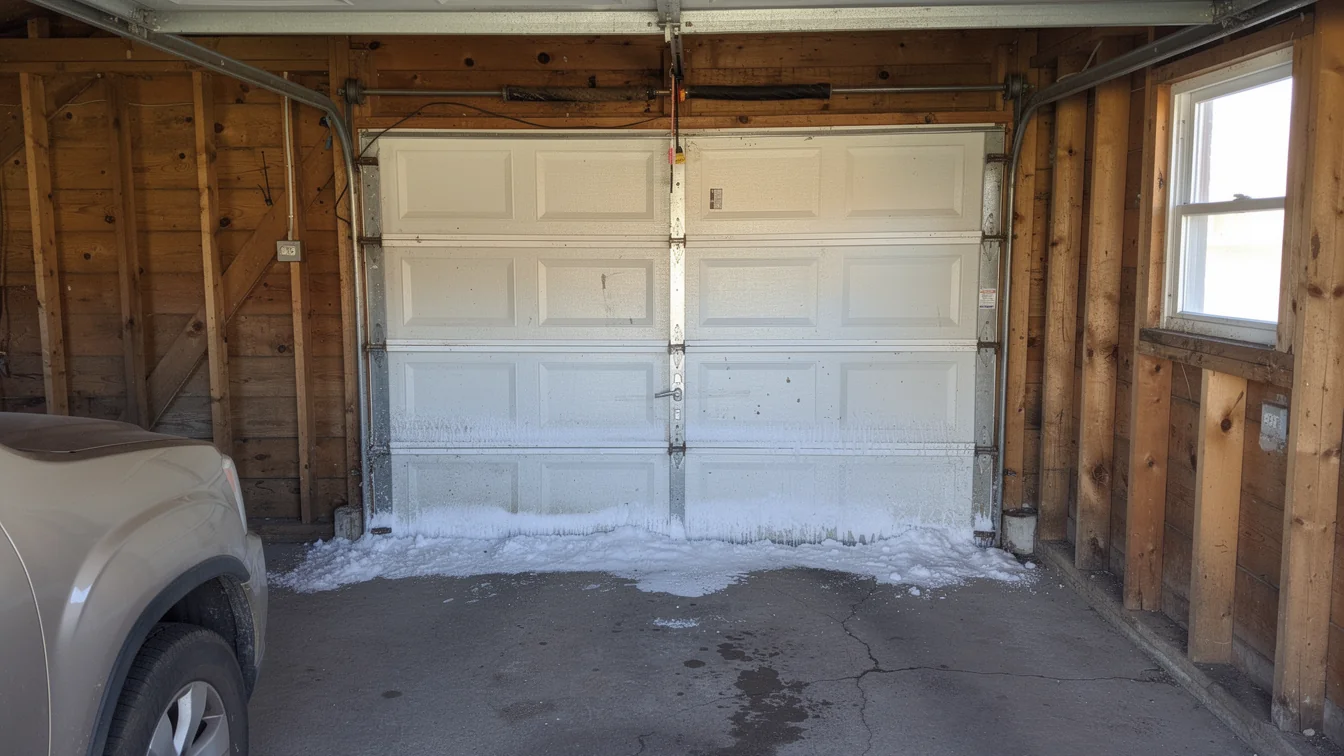
The climate here is mild with occasional freeze, not the brutal swings that force insulation on builders elsewhere. That's part of why nobody rushed to retrofit. A garage that sits a few degrees above freezing on the coldest mornings doesn't force the issue the way a harder winter would. But mild-with-freeze still means the inside face of an uninsulated steel door sweats on cold, damp mornings, and that moisture finds every seam in the hardware over a few decades. If your door is original to a house built in the 1980s or 90s, it was built to the standards of that era - not this one.
The Cost of This Job
We don't have a flat number to hand you here, because what this job costs depends on whether you're insulating an existing door panel-by-panel or replacing the whole unit, and on what's underneath - track, opener, hardware condition all factor in before a single insulated panel goes up. What we can tell you is what drives the decision in this area. Median household income across the service area sits around $128,295, and with roughly 80,030 owner-occupied houses in a service area of 137,015 households, a lot of these owners are weighing a repair against a full swap on a door that's 30-plus years old.
That math usually comes down to the door itself, not the insulation. If the panels, track, and hardware are all original to a house built in the 1980s, patching in insulation on a door that's near the end of its service life just defers the real job. If the structure is sound and only the insulation is missing, retrofitting is the cheaper path. We won't quote a number without seeing the door - too much of this job depends on what's actually on your garage, not on the year the house was built.
The Problem
An uninsulated door from the 1965-2001 build era isn't just a comfort issue. Steel panels with no foam backing flex more under wind load and temperature swings, and after thirty-plus years that flex works on the roller tracks and hinges the same way it works on any moving part that's never been upgraded. In a mild climate with occasional freeze, you don't get the dramatic failures that a harder winter produces, but you get a slower version: hardware that's stiffened and corroded from decades of condensation on the inside face of a cold steel panel, springs that were sized for a lighter original door and are now straining against a panel that's warped slightly out of true.
The practical sign is a door that's noticeably heavier to lift by hand than it should be, or an opener that strains and stalls partway up. That's often not the opener's fault - it's a door built to a 1980s spec doing a job it wasn't built for forty years later. Houses near Mountlake Terrace and Brier built in that same window show the same pattern, because the doors came from the same era of construction, not from anything particular to one street.
Leaving It Alone
You can leave an uninsulated door alone for a long time without it failing outright - that's the honest answer. Plenty of houses built in the 1965-2001 window still have their original door doing its job, and a mild climate with occasional freeze is forgiving compared to places that see hard winters. We're not going to tell you an uninsulated door is an emergency, because for most of the year here, it isn't.
What it does cost you is steady and quiet: a garage that never gets above the outside temperature by much, moisture on the inside panel on cold mornings, and hardware that wears faster than it would on an insulated door because it's handling a less stable panel through more temperature swings. If the door is original to a house built decades ago and the hardware is starting to show it - stiff springs, a track that's pitted, rollers that grind - that's usually the point where patching the insulation stops making sense and replacing the whole door starts to. Until then, it's a comfort trade-off, not a structural one.
Frequently asked questions
Is my garage door original to the house if it was built in the 1980s?
Often, yes. A lot of Lynnwood's housing stock dates to the 1965-2001 building boom, with the median house built around 1988, and a good share of those original garage doors are still in place. If yours has never been replaced, it's worth having the hardware checked even if the door itself still opens fine.
Does Lynnwood's climate make insulation urgent?
Not urgent, no. The area sits in a mild climate band with occasional freeze, which is forgiving compared to places with hard winters. Insulation helps with comfort and condensation, but an uninsulated door here is a slow cost, not a sudden failure risk.
Should I insulate my old door or just replace it?
Depends on what's under the surface. If the track, hardware, and panels are sound and only the insulation is missing, retrofitting makes sense. If the door is original to a decades-old house and the hardware is already worn, insulating it alone usually just delays a replacement that's coming anyway.
Related garage door services in Lynnwood
More garage door guides
Book garage door service in Lynnwood
Call now or request a quote - tell us what the door is doing and where you are.