
Lynnwood, WA · Garage Door Service
What Power Outages Do to an Older Lynnwood Garage Door Opener
Lynnwood homes built mostly 1965-2001 pair aging openers with Pacific Northwest power outages. Here's what breaks first and what to check before calling.
- Repairs & new doors
- Springs & openers
- Serving 6 nearby communities
How Local Conditions Play In
Most houses across Lynnwood's service area went up between 1965 and 2001, with the bulk of that stock dating to the 1980s and 90s. That matters here because the opener bolted to the ceiling is often the original unit or its first replacement, built in an era when battery backup wasn't standard equipment. Pair that with a mild climate that still gets occasional freeze - this isn't a place that sees deep cold snap cables, but wind and wet weather do knock lines down. When the power goes, a chain-drive opener with no backup battery leaves the door wherever it was last sitting, and if that's down, the car stays in the garage until someone finds the manual release. From Alderwood Manor and Mountlake Terrace a couple miles out to Brier, Martha Lake, and the Lake Stickney area, we see the same pattern: a garage built in that 1965-2001 window, an opener that's aged along with the house, and a power grid that isn't always reliable through a windy winter. The door itself usually isn't the problem. The opener's age and lack of backup power is.
The Cost of This Job
We can't quote a number without seeing the opener and the panel it's wired into - pricing depends on the unit's age, whether the circuit needs work, and whether you want battery backup added or a full opener swap. What drives cost on this specific job is usually one of three things: the opener is old enough that parts aren't worth sourcing, the existing wiring wasn't set up for a backup battery and needs an added outlet or circuit, or the manual release cord is worn from being used as the main way in and out during outages. Given the 1965-2001 housing stock common here, a lot of these openers are well past the point where patching makes sense versus replacing with a battery-backup model. That's the honest limitation: we'd rather tell you the old chain-drive unit isn't worth saving than charge you to extend its life another year. A quick look at the opener's age and the panel tells us which direction makes sense, and that's a conversation we have on site, not over the phone.
The Problem
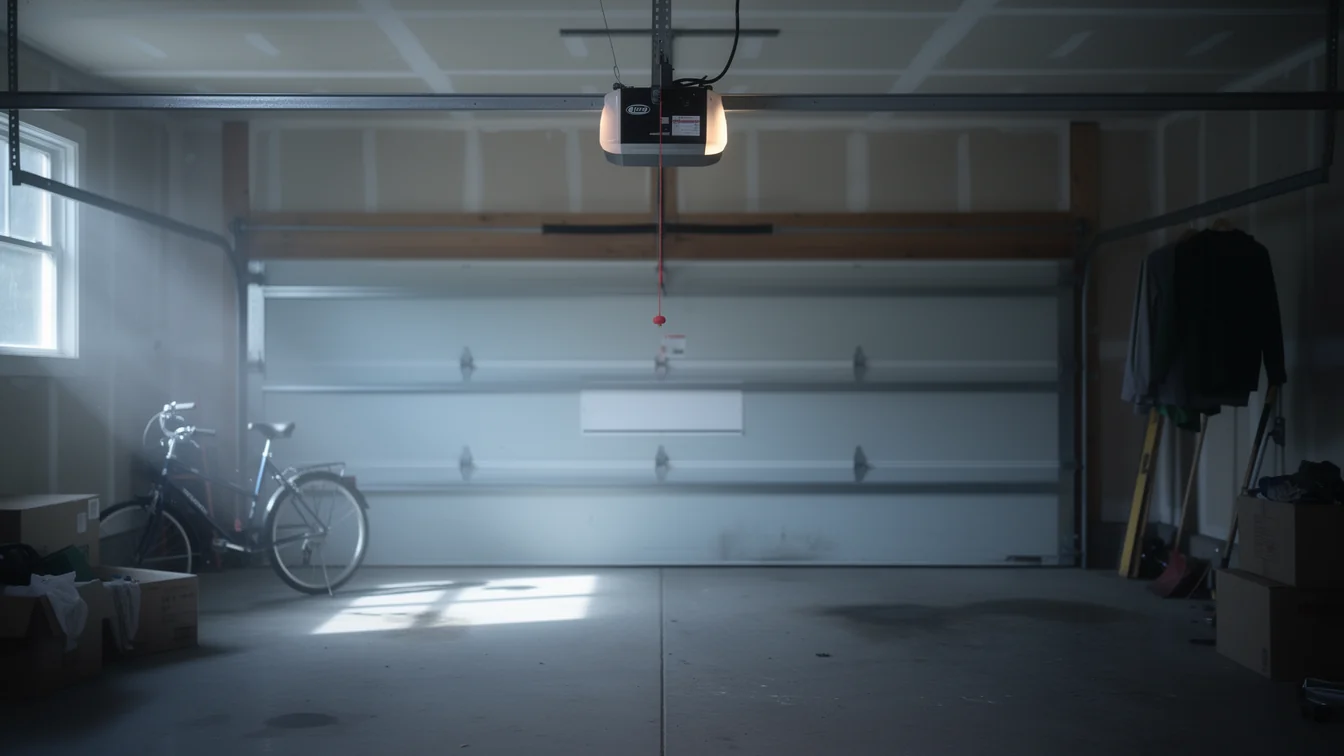
The failure mode we actually see isn't the door - it's the opener losing power with no way to lift the door from outside, and a manual release mechanism inside that most homeowners have never touched. In houses from the 1965-2001 era common across Lynnwood, that release cord is original or close to it, and it's often stiff, mislabeled, or blocked by stored boxes. When the power outages during a windstorm, the homeowner realizes the only way to move the door is from inside the garage, which doesn't help if the car's parked outside or the door is down and locked from a vacation setting. Across the roughly 80,030 owner-occupied houses in this service area, the opener is the single point of failure during an outage far more often than the spring or the track. None of this is a design flaw you can blame on a bad opener brand - it's just what happens when a unit built decades ago meets a modern expectation that the garage should work no matter what the grid is doing.
Leaving It Alone
Nothing forces the issue until the power actually goes out, which is exactly why this gets ignored. An opener that works fine on a normal day gives no warning that it has no battery backup and a manual release nobody's tested. With a median household income of $128,295 across this area, most homeowners here aren't choosing a battery-backup opener for the cost - they just haven't thought about it until they're standing in the dark trying to find the release cord with a flashlight. Left alone, the risk isn't catastrophic, but it's inconvenient at the worst possible moment: a stuck car during a storm, a door that won't seal while you're away, or a release mechanism that finally seizes from disuse right when you need it. None of that damages the door itself. It just turns a five-minute fix - adding backup power to an opener that's otherwise fine - into a middle-of-the-night problem you're solving by hand.
Frequently asked questions
Does my garage door opener need a battery backup if I live in Lynnwood?
It's not required, but it's worth considering given how much of the housing stock here dates to 1965-2001 openers with no backup built in. If a power outage during a storm would leave your car stuck inside, adding backup power to the existing opener is usually simpler than people expect.
Why won't my garage door open during a power outage?
Most openers from this era run on house power with no battery, so when the power outages, the motor won't move the door. There's a manual release cord hanging from the trolley that disconnects the opener so you can lift the door by hand - if you've never located it, that's the first thing to find before you need it.
Is it worth repairing an old opener or replacing it?
Depends on the age and what's actually failing. If the opener is original to a house built in the 1965-2001 window common here, parts can be hard to source and a replacement with battery backup often makes more sense than patching it. We'd rather tell you that than bill for a repair that won't hold.
Related garage door services in Lynnwood
More garage door guides
Book garage door service in Lynnwood
Call now or request a quote - tell us what the door is doing and where you are.