
Lynnwood, WA · Garage Door Service
Why a Garage Door Goes Off Track in Lynnwood
Lynnwood's 1965-2001 housing stock and mild-with-freeze climate push doors off track in predictable ways. Here's what causes it and what it costs to fix.
- Repairs & new doors
- Springs & openers
- Serving 6 nearby communities
How Local Conditions Play In
Most houses on this side of Lynnwood went up between 1965 and 2001, with the median build year sitting around 1988. That matters for tracks because the galvanized steel and the roller hardware from that era weren't built to last forever - they were built to last the life of a door that, by now, is thirty-plus years old on a lot of these garages. The same 1980s-90s stock repeats across the 35 named areas near here, from Alderwood Manor and Mountlake Terrace two miles out to Brier and Picnic Point a few miles beyond, so the pattern we see on one street tends to show up on the next.
Lynnwood sits in a mild climate band that still gets occasional freezes. That's a smaller swing than a lot of the country deals with, but it's enough. A freeze-thaw cycle through the winter months will swell a wood jamb a sixteenth of an inch, or let a track bracket work loose where it's bolted into header framing that's shifted over three decades. The door doesn't notice right away. Then one cold morning the roller catches on a track that's a few degrees out of parallel, and it jumps the rail instead of riding it.
None of this is dramatic. It's slow wear meeting hardware that was never designed to be adjusted twice.
The Cost of This Job
We don't post a flat number for this because the range is wide and depends on what's actually wrong - a bent track section is a different job than a torsion spring that let go and threw the door sideways on its rollers. We don't have a posted price list here, and we'd rather tell you that than make one up.
What we can tell you: the cost driver is almost always whether the track itself is bent or just knocked out of alignment. Alignment is a labor job - loosen the brackets, square the rail, retighten, check the roller path. A bent track section, especially on the bottom few feet where a car bumper or a dropped object usually hits it, generally means replacing that section rather than trying to hammer it straight. Hammering a track back into shape is a temporary fix at best; the steel has a memory and it'll walk back out of true within a season.
If the door came off track because a cable snapped or a spring broke, that's a separate repair layered on top, and it's the more urgent one - a door hanging on one cable is not safe to operate.
The Problem
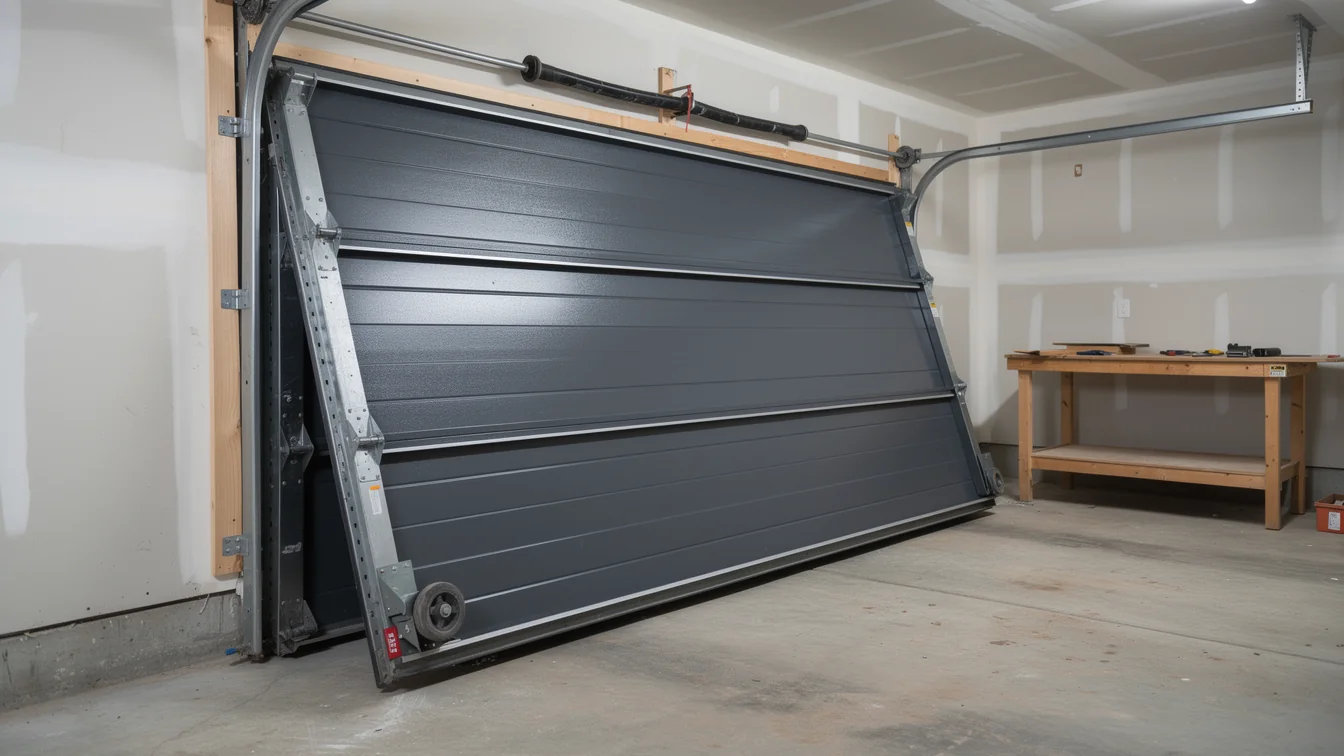
An off-track door almost always starts with the rollers, not the track. On houses from the 1965-2001 era common around Lynnwood, a lot of the original hardware is still steel rollers on steel track, no nylon, no ball bearings. Steel-on-steel wears a groove into itself over time, and once that groove gets uneven, the roller starts hunting side to side instead of running straight. Eventually it catches an edge and pops out of the rail entirely.
The other common cause is a bracket that's worked loose from the jamb. Houses of this vintage were framed to codes and expectations that didn't anticipate a door opening and closing a few thousand times a year for thirty-plus years. The lag screws holding the track bracket to the framing back out a little at a time, the bracket tips, and the track it's holding tips with it. You'll usually see this on one side more than the other, which is why a door that's off track often looks crooked rather than flat-out collapsed.
A door that's jammed halfway open, sitting at an angle, or grinding instead of rolling is showing you one of these two things.
Leaving It Alone
A door that's partway off track still looks like a door. It's tempting to keep using it carefully, maybe lifting it by hand past the rough spot. We'd tell you not to.
Once a roller is out of the rail, the weight of the panel is being carried wrong - sometimes by a cable that was never meant to take that load, sometimes by the opener motor straining against resistance it wasn't designed for. Either one can fail suddenly rather than gradually, and a panel coming down unexpectedly is the kind of thing that hurts someone or wrecks a car bumper underneath it.
The honest tradeoff: if the track is just knocked loose, waiting a week doesn't change much. If a roller has chewed up the rail edge, every cycle you run the door makes that edge worse and turns a bracket adjustment into a track replacement. We can usually tell which one it is over the phone if you describe where the door is sticking and whether it's grinding, but we'd rather look at it than guess.
Frequently asked questions
Why did my door suddenly jump off the track after working fine for years
Usually it's not sudden - a roller or bracket has been wearing loose for a while, and the morning it finally lets go feels sudden. On houses built in the 1965-2001 range common around Lynnwood, steel rollers on original track are the usual suspect after this many years of cycles.
Can I push the door back onto the track myself
We don't recommend it. A door off track is often being held by one cable or an opener taking weight it shouldn't, and forcing it back on can snap a cable or pull a bracket the rest of the way loose. It's a job for someone who can take the tension off safely first.
Does Lynnwood's weather actually affect this
Yes, in a smaller way than colder regions but still real. The mild climate here still includes occasional freezes, and that freeze-thaw swing is enough to shift a wood jamb or loosen a track bracket over a few winters, especially on houses already decades old.
Is it ever just the track, or is something else usually broken too
Sometimes it's only the track and brackets. But a door that comes off track hard enough to jam often strains a cable or spring at the same time, so we check both before calling the job done.
Related garage door services in Lynnwood
More garage door guides
Book garage door service in Lynnwood
Call now or request a quote - tell us what the door is doing and where you are.